The cons
Where AI hurts — the risks worth taking seriously
The same tool that saves your team time can quietly cost you a client, or worse, if you point it at the wrong job. These aren't reasons to avoid AI; they're the reasons to fence it in.
It makes things up, confidently
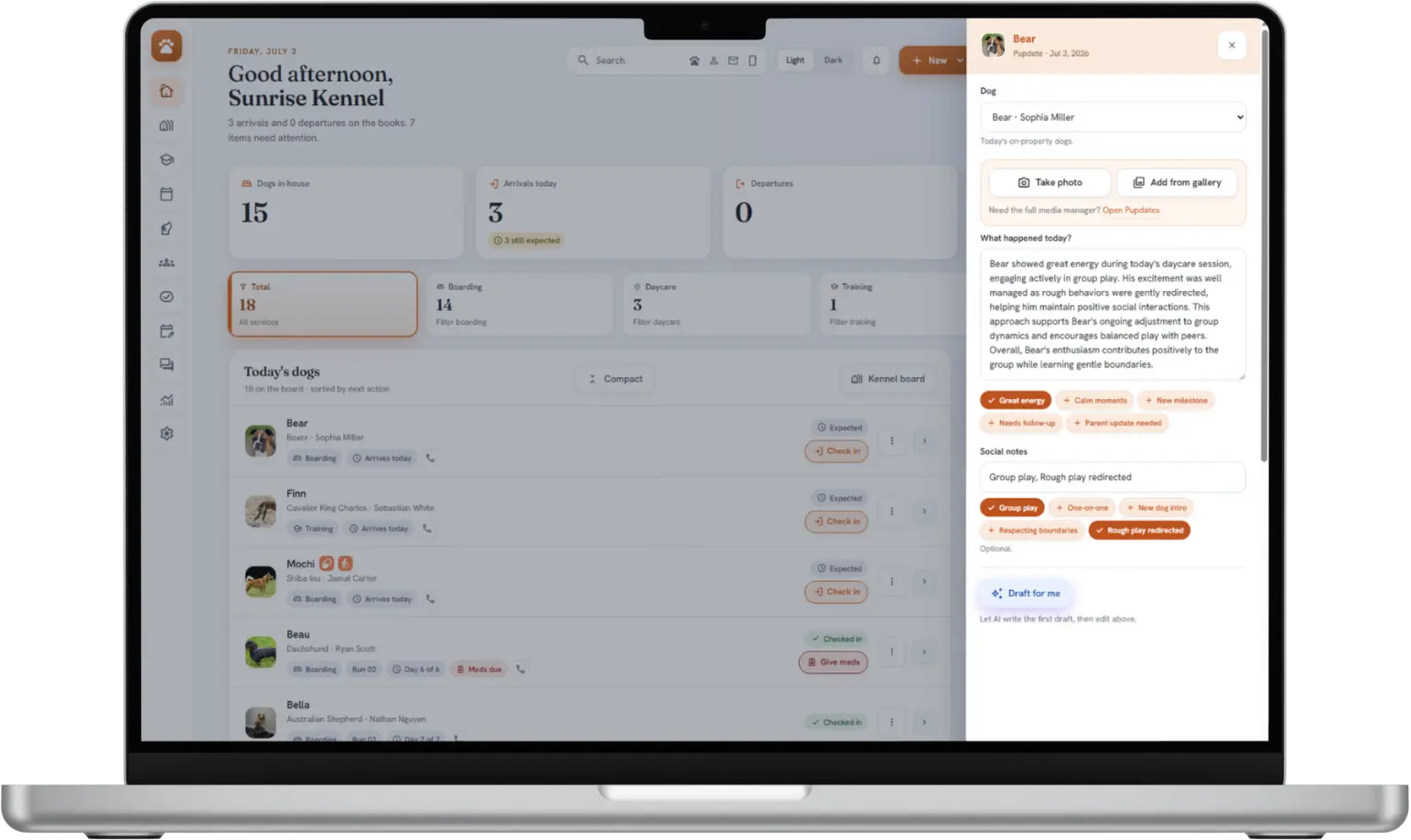
AI will fill a gap with a plausible-sounding invention — a walk that didn't happen, a detail that's wrong — and say it with total confidence. In a pet-parent update that's a broken trust; in a medical note it's dangerous. Anything unreviewed is a liability.
Auto-send erodes the relationship
The moment families sense the "personal" note about their dog was blasted out by a bot, the warmth is gone — and the one day the bot gets it wrong, it goes out to everyone at once. Automation without a human in the loop trades your reputation for a few saved minutes.
It can't read a dog
Temperament, stress signals, which two dogs will scrap, who needs the quiet run — this is the core safety judgment of your business, and it lives in a person watching body language, not in a model reading a database.
Your data can wander
Feeding client and pet information into AI tools raises real questions: where does it go, is it used to train someone's model, who can see it? A careless integration can leak the trust your clients placed in you. Know the answers before you turn it on.
It dulls the skill it replaces
Lean on AI for every judgment and your team slowly stops building the instinct that made them good. Use it for the typing, not the thinking, or you hollow out the very expertise clients pay for.
"AI-powered" is often just marketing
Plenty of features labeled “AI” are trivial automations dressed up to sound futuristic — and plenty of genuine AI is pointed at jobs it shouldn't do. The label alone tells you nothing. Ask whether it's generative or rule-based, what it actually does, and who checks it.