Built piece by piece
Each tool got added to solve one problem, on its own day, by whoever was frustrated that week. Nobody ever designed the whole thing — it accreted.
Booking lives in one tool, payments in another, reminders in a spreadsheet, the follow-up in your inbox — stitched together with a couple of Zapier zaps and a lot of you remembering how it all fits. It works. Right up until the day you're not there to make it work.
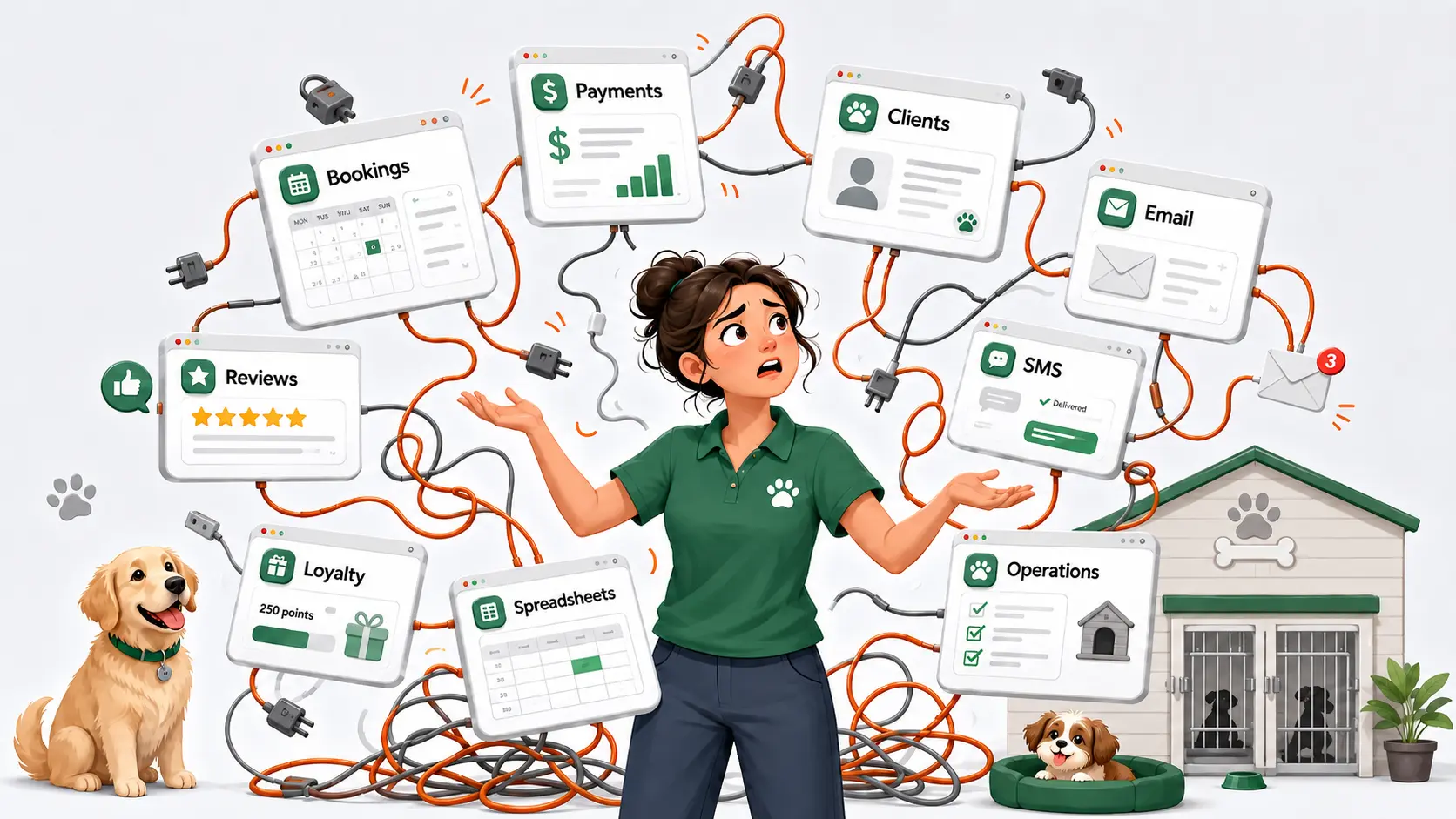
Almost every facility's "system" is really a pile of good tools doing their own jobs in their own corners. A booking platform. Stripe for payments. Gmail for client emails. A texting app for reminders. A spreadsheet — or three — for the numbers the software won't show you. Maybe Zapier holding a few of the pieces together. None of it is bad software. The problem is the gaps between it.
Each tool got added to solve one problem, on its own day, by whoever was frustrated that week. Nobody ever designed the whole thing — it accreted.
A Zapier zap here, a copy-paste there, a "don't touch that sheet" everywhere. Every connection is something that can — and quietly does — break.
The update that never sent, the rebooking nobody followed up on, the lapsed regular — they fall between the tools, where no single system is watching.
Here's the part nobody puts on a slide. The integration layer for that pile of tools — the logic, the exceptions, the "oh, for that customer we do it this way," the workaround for the thing that's been broken since 2022 — none of it lives in the software. It lives in your head.
And the owners who do this well are often the most exposed. You built something that genuinely works — but it works because you're the one who understands it. Your team learned the buttons. They can check a dog in. What they can't do is tell you why the Tuesday report is wrong, fix the automation when it quietly stops firing, or run the place the way you would for a week while you're gone.
They learned how to use it. They never learned how it runs — or how to fix it when it doesn't.
A system that only one person understands isn't a system. It's a liability with good uptime. Here's what it quietly costs you.
A real day off means the place runs on a knife's edge, or you're answering "where do I find…" texts from the beach. The business doesn't have a vacation policy for the owner.
Staff can operate the tools, but every judgment call, every fix, every "why do we do it this way" routes back to you. You've hired help you still can't fully hand things to.
Onboarding isn't "here's the system" — it's downloading what's in your head, one conversation at a time, hoping you remembered to mention the exceptions.
A buyer isn't purchasing a system that runs the operation — they're purchasing you. The day you walk out, the operating manual walks out in your head.
The fix isn't another tool on the pile. It's collapsing the core of the operation into one system that actually holds it — so the way the place runs lives in the software, where your whole team can see it, instead of in one person's memory.
That's the whole idea behind BarkWhiz. Reservations, the kennel and care floor, customer and dog records, and the follow-up that drives repeat business — in one connected place, so there are fewer seams to glue and fewer things that only work because you remembered to make them. The AI drafts the next step; your team reviews and sends. The "how it runs" becomes the system's job, not yours.
An honest note: it won't replace every tool you own overnight, and we won't pretend it does. Plenty already runs in one place today — reservations and the care floor, customer and dog records, and a branded customer portal with online booking, vaccine uploads and pay-your-balance, now in early access with our first facilities. QuickBooks, Stripe, Google, Twilio and Resend are the outside integrations live so far, and automated email and text reminders now send straight from BarkWhiz — with AI-drafted updates still reviewed by your team first. We'll always tell you exactly what's ready. But the goal is the opposite of a duct-tape stack: one operating layer your team can actually run, so the business doesn't live or die by whether you're in the building.
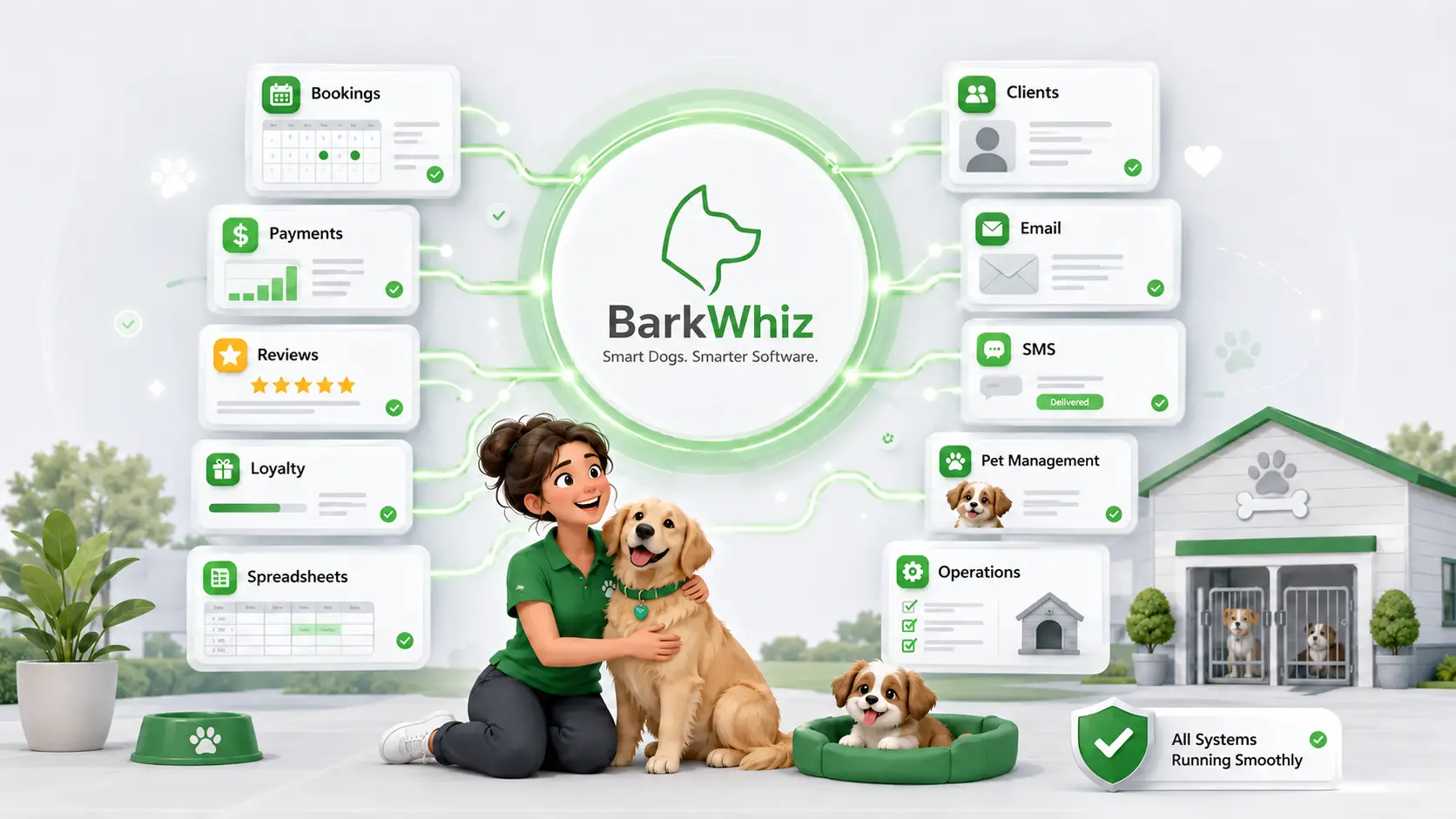
The everyday work that used to span five tools lives in one — so there's less glue to maintain and fewer gaps for things to slip through.
The way your facility runs is captured in the software, not your memory — so it's visible to your team and doesn't leave when you do.
Built for fewer clicks and onboarded by hand, so staff can operate — and understand — the system, not just push its buttons.
This is the problem the founder lived before he built BarkWhiz — a stack only he understood, running two facilities. See what the work looks like in one system →
Founding facilities receive Ops + CRM for $249/month, locked for 24 months. After that, they retain a permanent 15% discount from the then-current list price.
We reply within two business days—or your first month is free. No credit card required.
Not ready for a founding spot? Just keep me posted